The Artisans of Sound: Philip J. Harvey The Artisans of Sound: Philip J. Harvey...
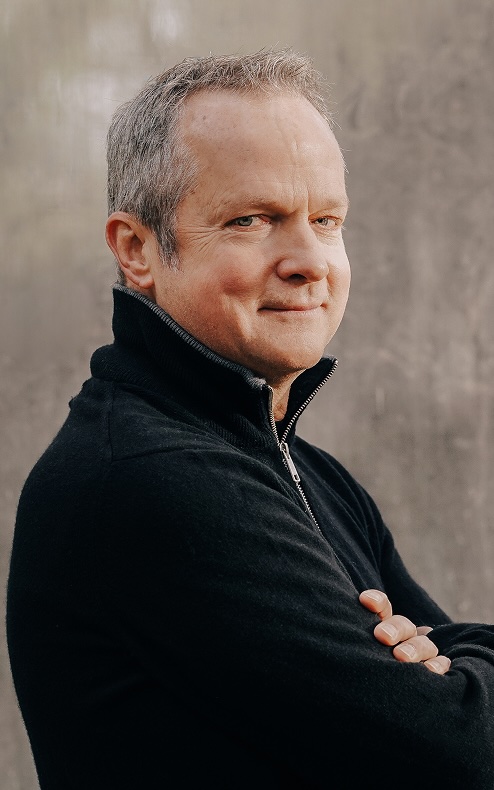
Somewhere between Houston and Austin, on a long drive with a band he barely knew, Philip J. Harvey figured out what he wanted his life to be. Not a musician, though he had been one. Not a producer, though he could have gone that way. An engineer — the invisible hand that makes every moment of a performance land the way the artist imagined it would. It was a quiet decision that led to one of the most remarkable careers in live sound.
Early Influences and a Natural Path Toward Music
Philip’s relationship with sound began in a home where music was woven into everyday life. His mother was a gifted pianist and pipe organist with perfect pitch, and stories of her playing pieces by ear after practicing on a cardboard keyboard were early lessons in talent and dedication. That environment imprinted something lasting on Harvey and his siblings. They all played instruments in school ensembles and absorbed the sense that sound could express emotion in ways words often could not.
As a teenager, Philip discovered rock. He plugged a self-bought electric guitar into the family stereo, teaching himself by mimicking the records he loved. Soon he was playing in punk bands, producing DIY shows with friends and learning how live sound shaped the energy of a room. Those early productions were both creative expression and a first education in the mechanics of performance.
Finding Engineering and the First Break
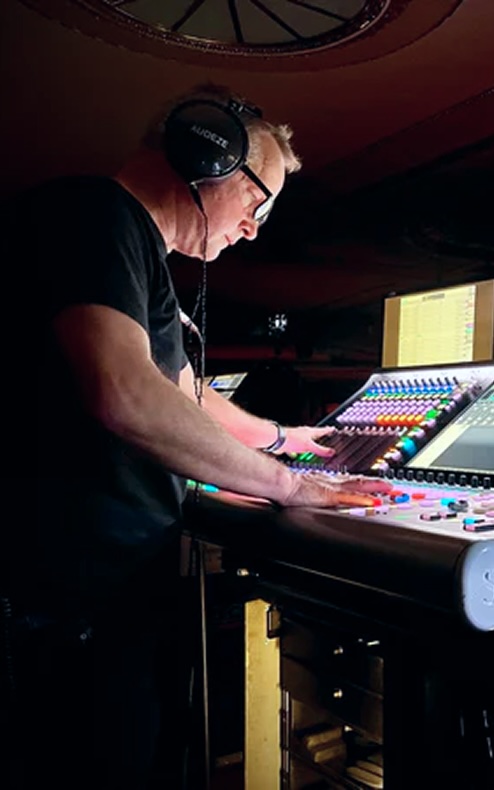
Philip’s years as a young musician deepened his curiosity about the technical side of sound. Wanting to understand how the art he loved worked beneath the surface, he pursued audio production at the Art Institute of Houston. Immersing himself in the science of sound opened new possibilities and set him on a path that felt both challenging and natural.
His first major opportunity came at Fitzgerald’s, the storied Houston roadhouse where he began engineering live shows. He embraced the learning curve with optimism, treating each performance as a chance to refine his instincts. Word of his talent spread quickly, and the band, SoulHat, from Austin soon invited him on tour. The long drives and unpredictable nights strengthened his dedication and confirmed that engineering was the work he was meant to pursue.
Major Milestones and Work with Influential Artists
A defining moment arrived in 2007 when Philip joined The White Stripes during the Icky Thump cycle. He had just come off the road with The Secret Machines in 2006, and it was his first breakthrough into a higher artistic tier, opening the door to touring with The Raconteurs and contributing to the earliest sessions of The Dead Weather. One of the tracks he engineered during a demo session at Jack White’s home studio became the final track on the band’s debut album, a milestone that affirmed his growing confidence at the console. His work during that period also earned him live audio recording credits on The White Stripes: Under Great White Northern Lights, the documentary film capturing the band’s intimate 2007 tour through Canada’s northern territories. It remains one of the most celebrated live music films of its era, and Harvey’s contribution to its sound is quietly central to why it resonates the way it does.
That upward trajectory continued into 2013 when he was brought onboard to tour with My Bloody Valentine and then in spring 2016, supporting Mumford & Sons on the Wilder Mind cycle, further broadening his palette across large scale stages and modern rock production. Most recently, Philip served as FOH engineer for Keane’s Keane20: Hopes and Fears 20th anniversary tour, a run that stretched across all of 2024 and into the first quarter of 2025. The assignment of handling a milestone celebration of one of British rock’s most beloved albums on stages across the world was a testament to the trust artists place in him.
Before this chapter, Philip spent eight formative years touring with the jazz trio Medeski Martin & Wood. The role demanded versatility. He handled front-of-house, monitors, production management and backline while supporting an ever-expanding collection of vintage keyboards and acoustic instruments. He often calls this period his audio boot camp, one that shaped his technical depth and expanded his understanding of musical dynamics.
In more recent years, Philip has become widely known for his work with Lorde. Her tours brought him closer collaboration with L-Acoustics during the earliest development stages of L-ISA immersive technology. His feedback, multitrack tests and willingness to push creative boundaries helped the team refine the system for arena scale deployment during Lorde’s touring cycles. The process was collaborative, exploratory, and energizing for everyone involved.
A Philosophy Rooted in Emotion, Energy, and Evolving Craft
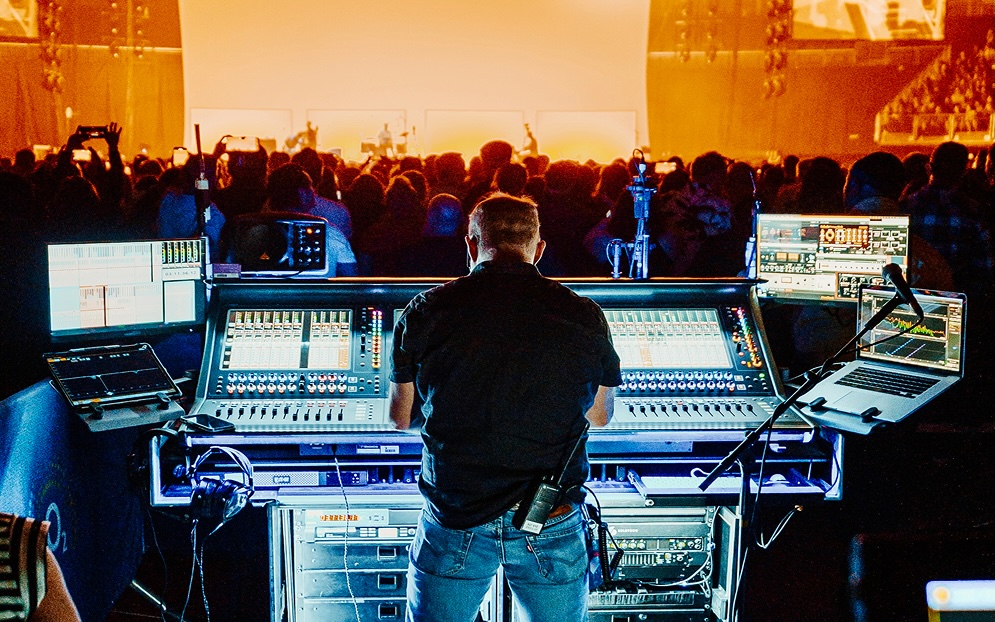
Philip believes that sound engineering is both a science and a kinetic exchange between artist, engineer, and audience. Even after decades behind the console, Philip has never lost his sense of awe at what a great mix can do to a room. “You can really feel the reciprocal energy between the artist, the engineer, and the audience,” he says. “When the energy rises, I still get moments where the hair on the back of my neck stands up, even though I’ve been doing this for 30 years.” It is that connection, as much as the craft itself, that has sustained him through years on the road.
Philip’s connection with L-Acoustics deepened during the formative stages of L-ISA immersive technology. When the system was first demonstrated for him at the company’s Marcoussis headquarters, he immediately sensed its ability to reveal musical nuance with a level of clarity and dimensionality he had long imagined but had not yet encountered. The moment opened a new realm of creative possibility and aligned naturally with the instincts that had guided his career from the beginning. That instinct proved pivotal when Lorde’s tour became the first-ever full touring deployment of L-ISA. Even L-Acoustics founder Christian Heil understood that introducing such groundbreaking technology on a major global stage would require an engineer with rare sensitivity and vision. Entrusting Philip with its stewardship ensured that L-ISA’s debut in the touring world rested in exceptionally capable hands.
Europe is also where Philip now calls home. Since 2010, Philip has lived in Amsterdam with his wife and three sons. The city offers a balance that fuels his creativity and supports his life away from the road. He cycles through its streets daily, splits his studio time between his own home setup and Amsterdam Recording Company, the commercial studio he is partnered in, and finds joy in cooking, which he sees as closely related to mixing. Both call for intuition, careful balance and an understanding of how individual elements can come together to create something meaningful.
A Career Built on Curiosity and Commitment
Every night, in some city, in some venue, Philip J. Harvey takes his position behind a console and listens. The band runs through its check, the room fills, the lights drop. And then, for two hours or three, he does what he has always done: he shapes the invisible, tends to the intangible, and gives an audience the best possible version of the music they came to hear. There is rarely any applause for the engineer. But everyone in the room remembers. Philip J. Harvey has spent his career making other people’s music feel inevitable. That is a harder thing to do than it sounds, and rarer than it should be. He makes it look effortless. It is anything but.
Subscribe to Our Newsletter
Get the lastest news and find out about listening events.