The Stadium Sound System: How L‑Acoustics Solves the Toughest Challenge in Audio, Every Time The Stadium Sound System: How L‑Acoustics Solves the Toughest Challenge in Audio...
Ask any audio engineer which environment keeps them up at night, and the answer isn’t usually a concert hall or a theater. Sports venues, like arenas and stadiums, rank among the most acoustically demanding environments for any sound system. Extreme throw distances, hard reflective surfaces, tens of thousands of fans generating significant ambient noise, structural weight limits, architect-driven aesthetic constraints, and an event calendar that shifts from football to concerts to motorsport with little downtime in between. There’s just no other type of venue that stacks the odds against good audio quite so efficiently. And yet, L‑Acoustics stadium sound system rises to that challenge time after time, venue after venue.
Why a Stadium Sound System is the Hardest Engineering Problem in Audio
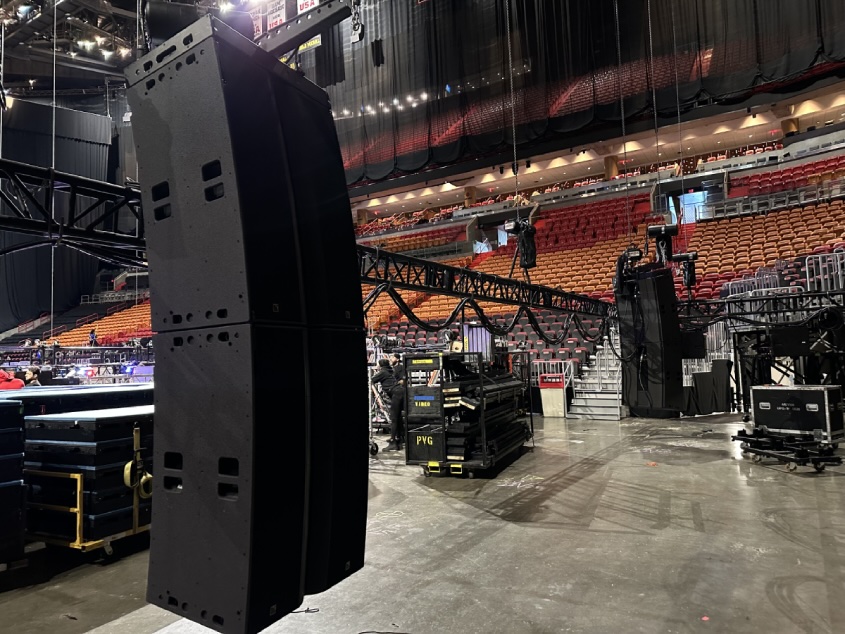
To understand why sports venues are so acoustically complex, it helps to consider everything working against the sound engineer from the moment the building goes up. Scale alone is formidable. A major stadium or arena might seat anywhere from 20,000 to over 100,000 spectators, spread across multiple tiers at extreme distances from any speaker position. Achieving uniform SPL from pitch-side to the back row of the upper deck is a daunting engineering task.
Then there is the architecture. Hard concrete surfaces, steel structures, curved rooflines, and vast open spaces create reverberation and reflection patterns that can render a clean audio signal unintelligible. Structural weight limits constrain speaker placement, and architects who have invested enormously in a venue’s visual identity are rarely willing to let an obtrusive speaker cluster compromise it. Add outdoor venues subject to wind and weather, and the picture is complete. Getting arena and stadium sound right requires good equipment and a rigorous, bespoke engineering approach for each individual venue.
Beyond acoustic performance, modern sports venues must also meet stringent life-safety requirements. EN54 is the European standard governing fire detection and alarm systems, and achieving EN54 certification for a stadium sound system means that the same system delivering concert-grade audio must also serve as a certified life-safety tool — a critical consideration for any venue operator responsible for the safety of tens of thousands of people. L-Acoustics is the first manufacturer to achieve EN54 certification at this scale in EMEA, setting a new benchmark for what a stadium sound system can and should deliver.
Finally, there is the programming challenge. Modern sports venues are not single-purpose buildings. They host concerts, corporate events, international competitions, motorsport, e-sports, basketball, football, and everything in between. A stadium sound system cannot be optimized for one use case. It has to perform across all of them, every time.
Stadium Sound System Design: How L-Acoustics Answers the Challenge
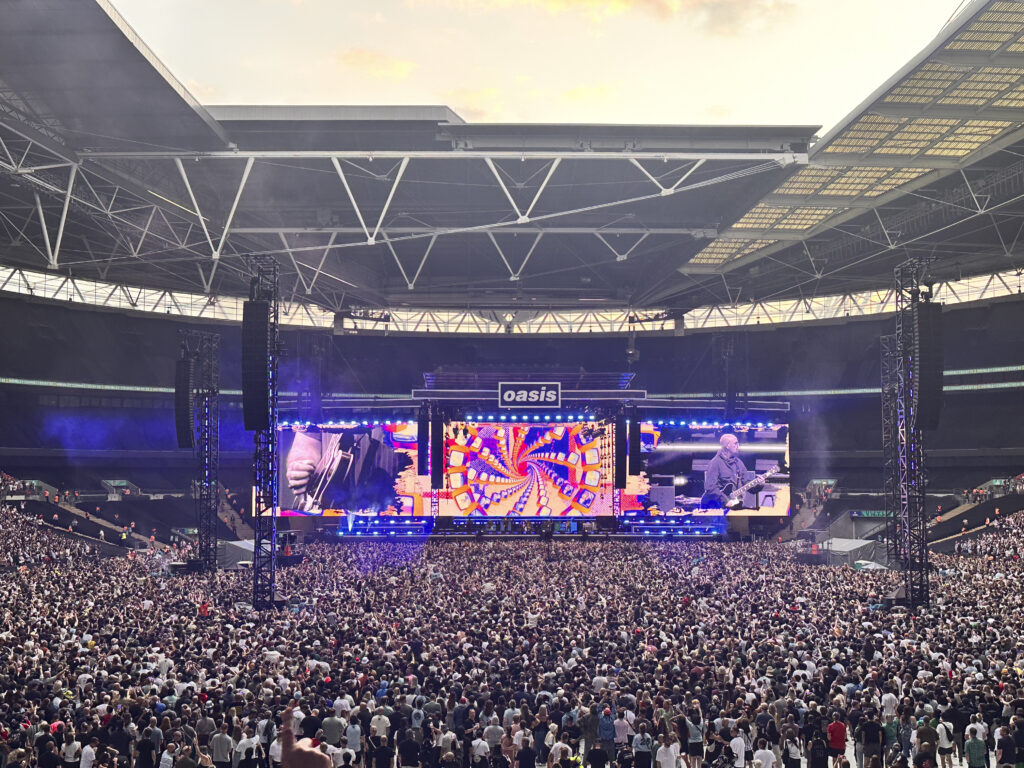
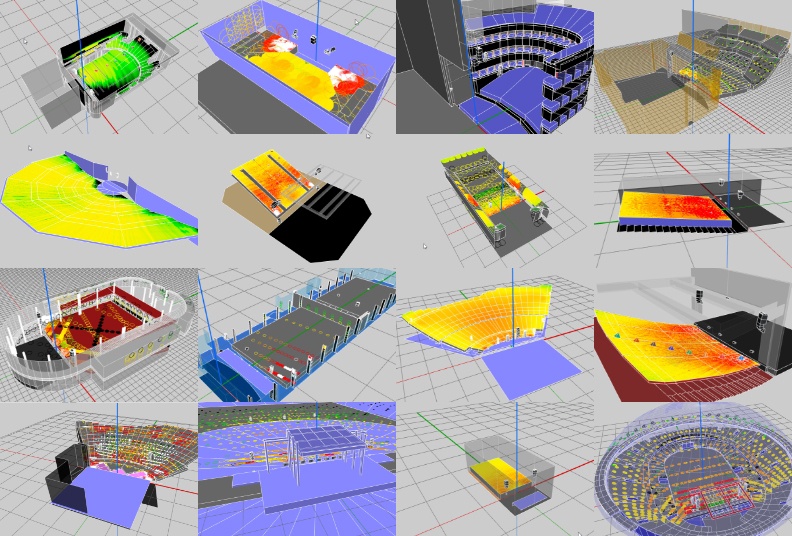
L-Acoustics first approaches the job at hand virtually. Our proprietary 3D acoustic prediction and sound modeling software, Soundvision, engineers model coverage, SPL distribution, throw distances, and reflection management before anything is specified or purchased. The design is fully optimized for the specific geometry and challenges of each individual space.
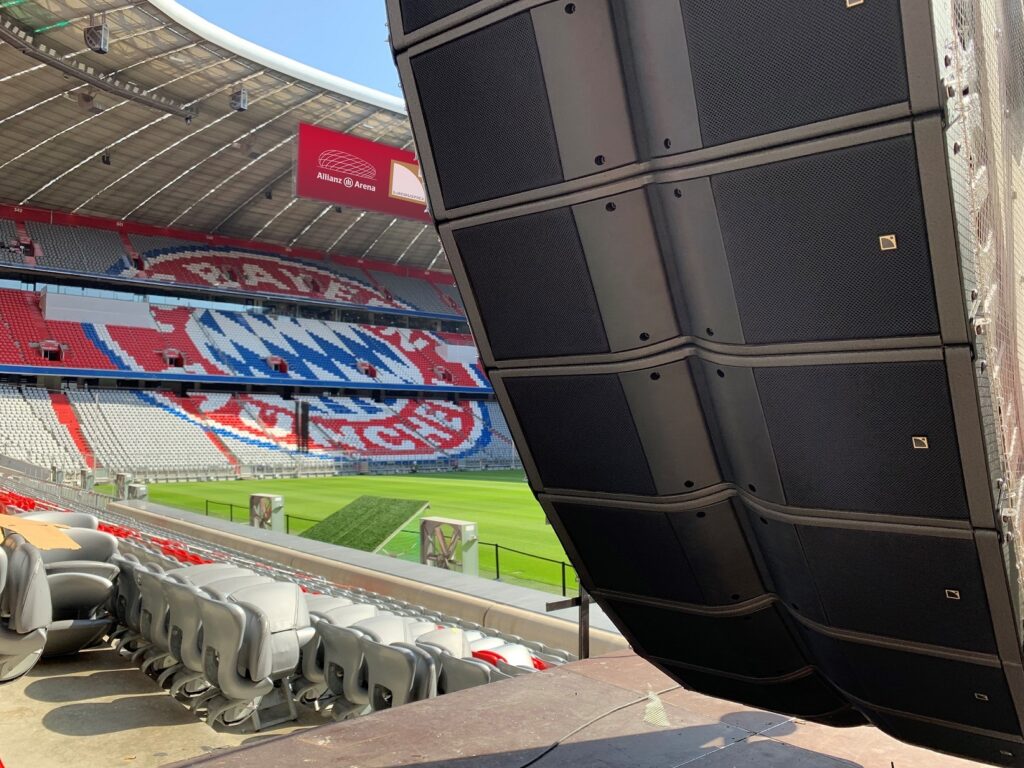
At the Allianz Arena in Munich, home to Bayern Munich and one of the most architecturally striking stadiums in Europe, the stadium’s membrane roof created considerable reverberation in the spectator areas, while weight restrictions and sightline requirements demanded a solution as efficient as it was effective. The Kara-based stadium loudspeaker sound system comprised 266 linesource elements, 54 subwoofers, and 48 delay arrays for the curved areas of the stands, driven by 110 LA4X amplified controllers at a total output of 440,000 watts. As sound engineer Harald Frisch of design consultant Müller-BBM put it, “the Kara system offers an almost ideal ratio of weight, precision of coverage, achievable sound pressure level, and sound quality.” Allianz Arena Managing Director Jürgen Muth was equally direct: “With L-Acoustics, we chose one of the world’s leading suppliers in the field of professional sound system technology, which offers a complete package of sound characteristics, flexibility, and cost-effectiveness.”
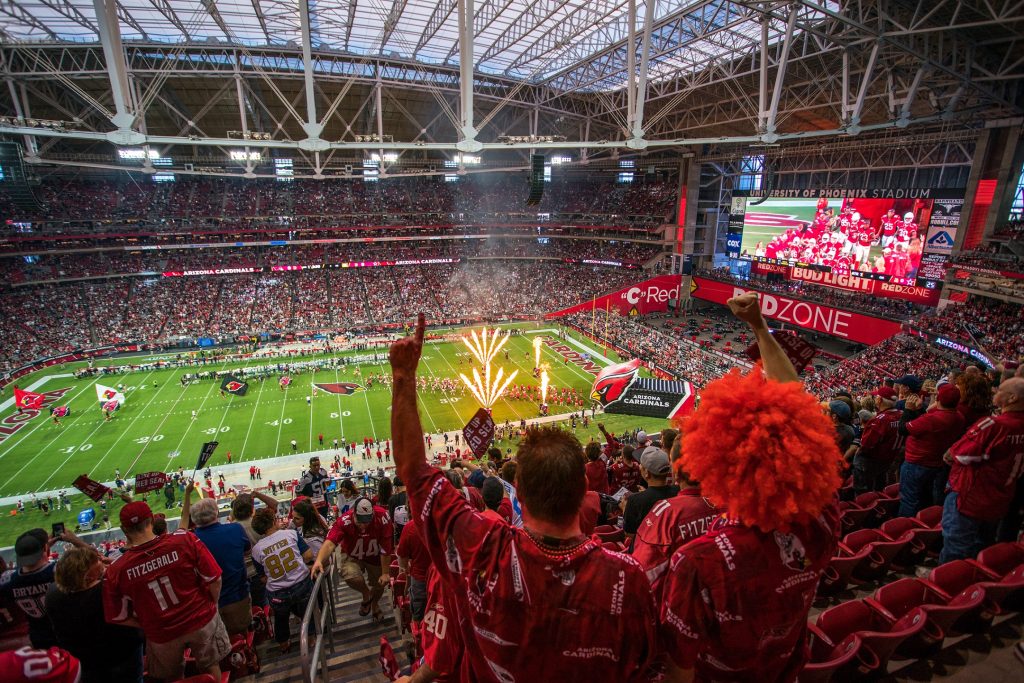
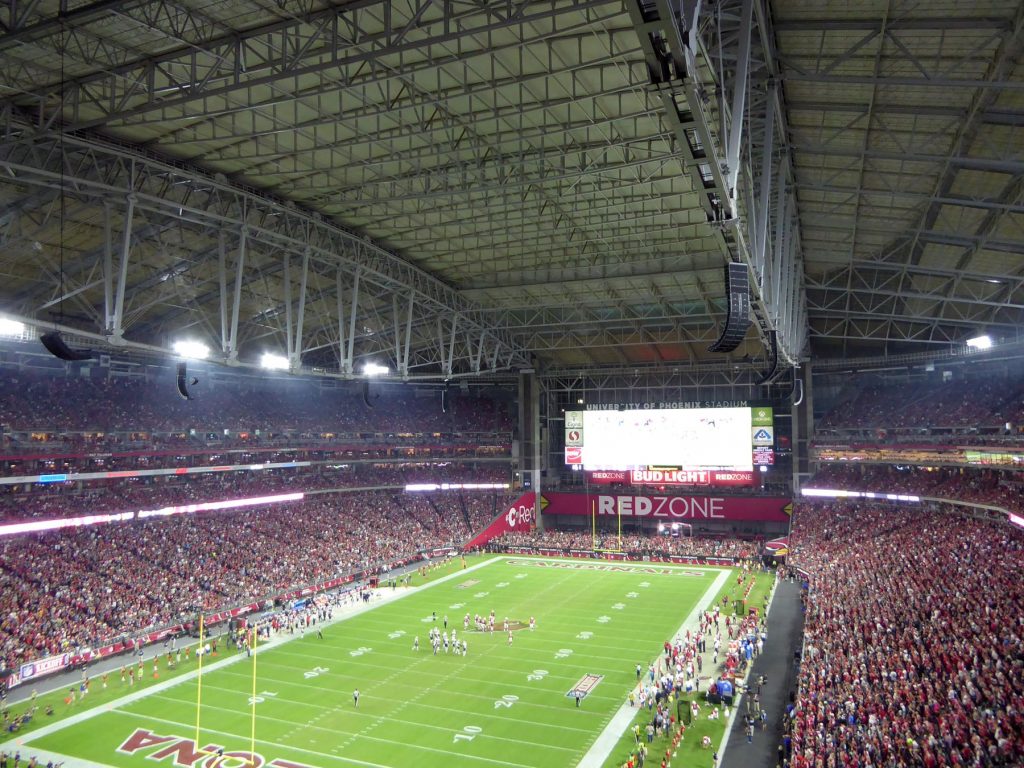
At State Farm Stadium in Glendale, Arizona, home to the NFL Arizona Cardinals and a regular host of the Super Bowl, international soccer, concerts, motorsports, and e-sports, the challenge was delivering uniform coverage across a retractable indoor/outdoor environment without the need for delay speakers. The K2 and K1-SB stadium sound system achieved exactly that. EVP David Shoemaker described the outcome as exceptional: “The voicing is exceptional; the coverage is smooth and consistent from row to row, array to array, and all with plenty of headroom.” Arizona Cardinals President Michael Bidwill put it in broader terms, noting that the stadium sound system upgrade “keeps State Farm Stadium at the forefront in a very competitive landscape of sports and entertainment venues.”
Indoor arenas present their own distinct set of challenges, and FedExForum in Memphis, home to the NBA Memphis Grizzlies and the University of Memphis Tigers, and one of the busiest multipurpose arenas in the country, is a case in point. When WJHW Principal Mark Graham led the design of the venue’s new Kara IIi stadium sound system, the brief was clear: “The original system from 2004 couldn’t meet current requirements for music playback expected by today’s fans. The arena’s new rigging infrastructure covering two-thirds of the venue floor required an audio design that could deliver powerful performance within a compact footprint. Kara IIi meets these requirements perfectly.” The results spoke for themselves. “Kara IIi sounds fantastic across various music genres,” Graham added. “Its consistent coverage, both vertically and horizontally, combined with consistent speech intelligibility make it ideal for this installation.” For Seth Tackett, Senior Director of Arena Operations, the impact on the fan experience was immediate: “L-Acoustics has elevated the experience for fans at FedExForum with world-class sound. Whether it is watching the Grizzlies or Tigers, or attending one of our many concerts or shows, guests of FedExForum are experiencing connections to our events like never before.”
Stadium Loudspeakers Built for Every Event
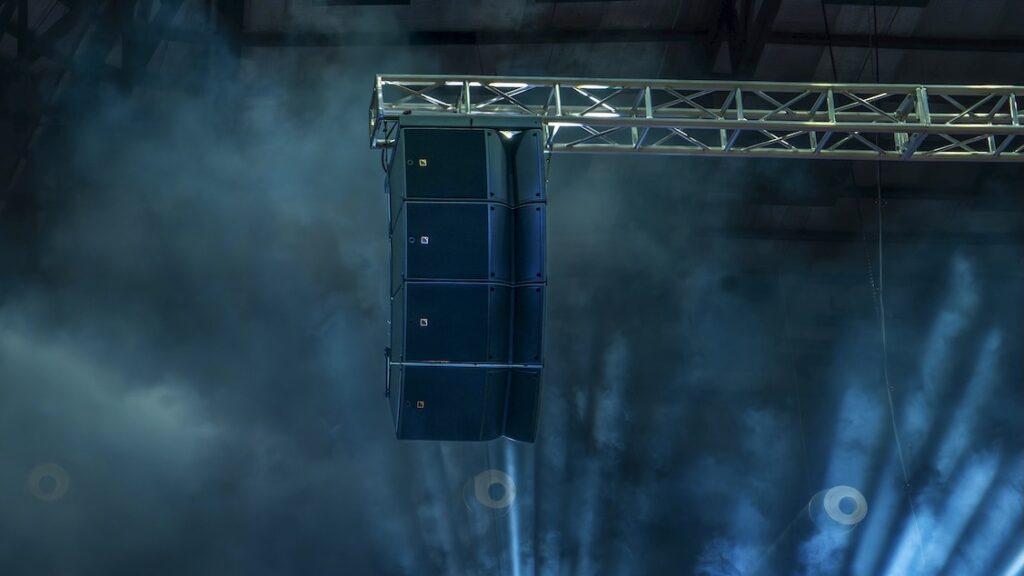
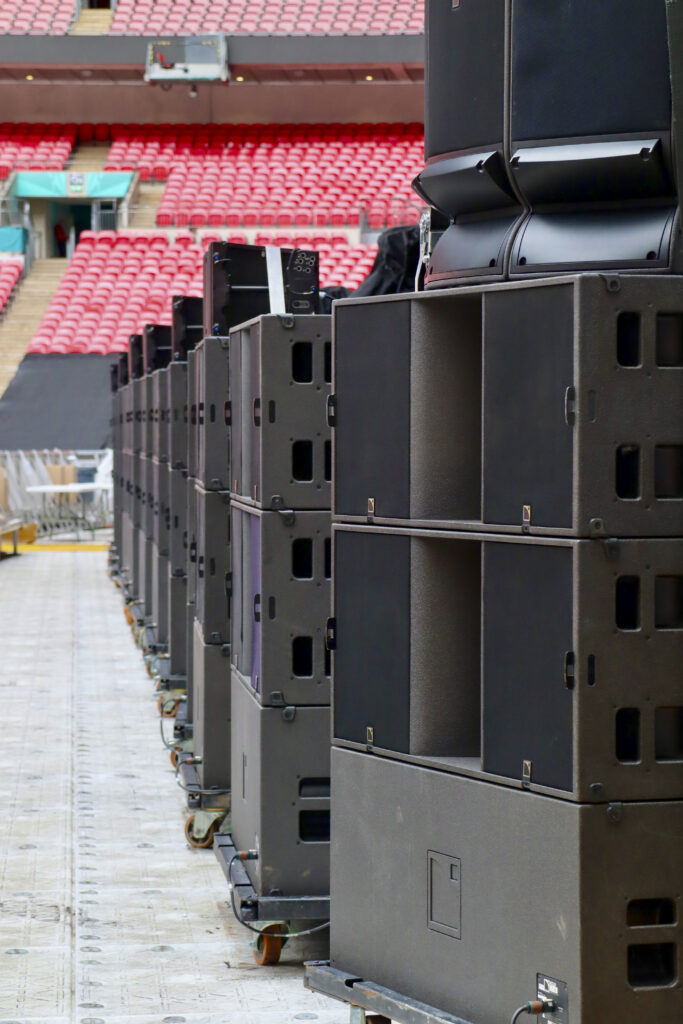
What sets L-Acoustics arena and stadium systems apart is their ability to scale and adapt seamlessly to every event on the calendar. Loudspeakers, amplifiers, networking, and Soundvision design software work together as a single integrated ecosystem, giving integrators and operators the tools to design, calibrate, and future-proof any installation from the ground up, whether the venue holds under 1,000 seats or over 100,000.
From NFL stadiums to European football arenas, from NBA arenas to university complexes, L-Acoustics stadium sound systems are tackling the hardest issues in audio. And while the challenges change with every venue, with L-Acoustics, the standard of performance never does.
Visit our Applications page to learn more about L-Acoustics professional sound systems for Arenas and Stadiums.
Subscribe to Our Newsletter
Get the lastest news and find out about listening events.